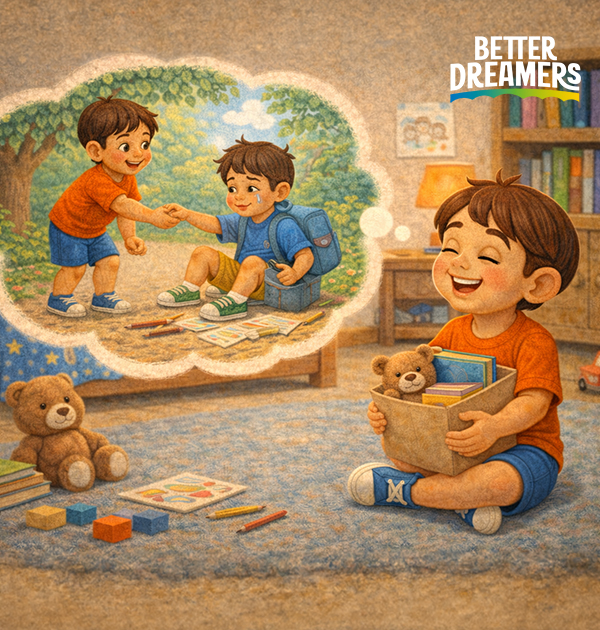
When we think about teaching values, we often think about rules.
Say thank you.
Don’t hit.
Share your toys.
Tell the truth.
Rules matter. But they don’t build a moral compass on their own.
A moral compass isn’t just about knowing what’s right. It’s about feeling why it’s right.
And that’s where imagination comes in.
Imagination Lets Children “Try On” Choices
When a child listens to a story, something powerful happens.
They don’t just hear what the character does.
They step inside the character.
They imagine:
- What it feels like to be left out
- What it feels like to be brave
- What it feels like to tell the truth when it’s hard
- What it feels like to hurt someone — and then make it right
Imagination allows children to rehearse moral decisions safely.
They experience consequences without real-world risk.
This is how empathy grows — not through instruction, but through experience.
Stories Turn Abstract Values Into Real Feelings
Words like “kindness” or “honesty” are abstract to young children.
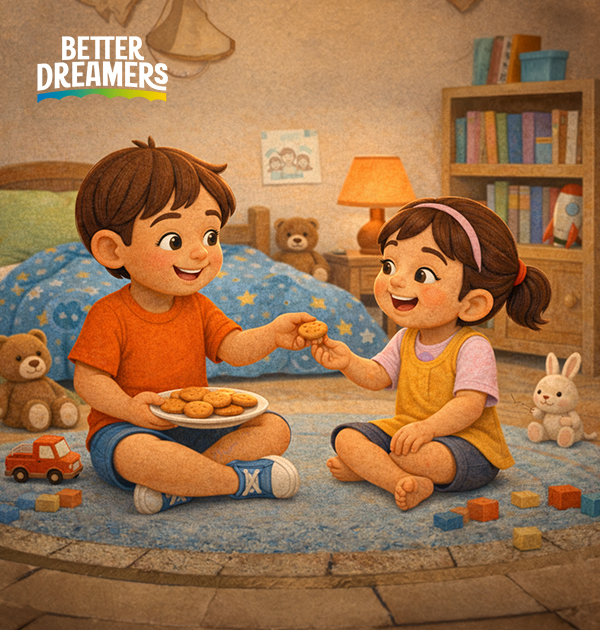
But a story about a character who shares their last biscuit?
That’s concrete.
A story about someone who lies and feels heavy inside afterward?
That’s understandable.
Imagination translates big ideas into emotional reality.
It gives values texture. Tone. Meaning.
Without imagination, morals stay as words.
With imagination, they become lived experiences.
It Encourages Reflection Instead of Obedience
A child who follows rules out of fear behaves differently from a child who acts out of understanding.
Imagination encourages reflection.
Instead of:
“Don’t do that because I said so.”
It becomes:
“I don’t want to hurt them. I know how that feels.”
Stories plant internal motivation.
They shift morality from external control to inner guidance.
And that shift is everything.
Imagination Slows Down Impulses
Young children are naturally impulsive.
Their brains are still developing the ability to pause and think before acting.
Stories help strengthen that pause.
When a character in a story stops, thinks, and makes a better choice, children mentally rehearse that process.
They begin to internalise:
Pause.
Think.
Choose.
Imagination strengthens self-regulation because it gives children models for handling strong feelings.
Imagination Makes Values Personal
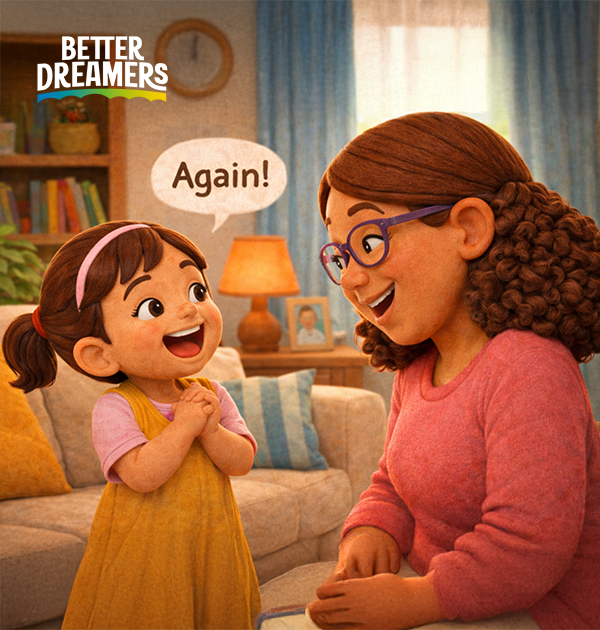
When a child imagines a story repeatedly, it becomes part of them.
They might say:
“I don’t want to be like that character.”
Or
“I want to be brave like her.”
The story stops being something they heard.
It becomes something they identify with.
And identity shapes behaviour more strongly than instruction ever could.
Why Gentle Stories Matter
Fast, overstimulating content doesn’t leave much room for reflection.
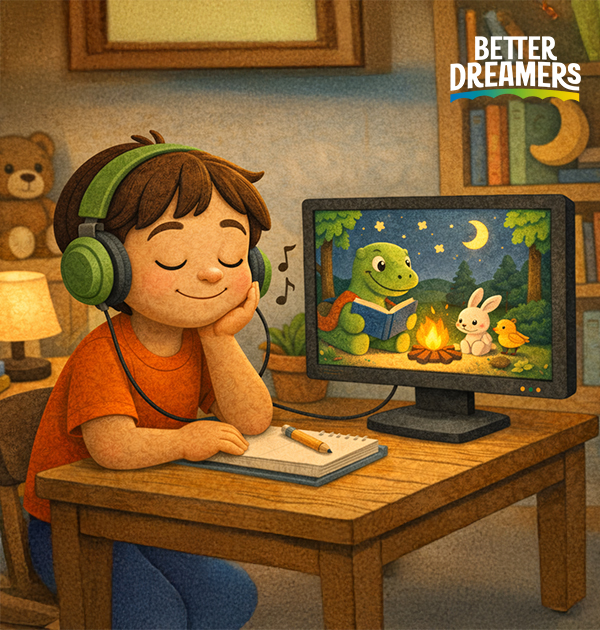
But calm, emotionally grounded storytelling gives children space to imagine fully.
When stories are:
- Slow enough to follow
- Safe enough to explore feelings
- Simple enough to understand
Children don’t just consume them.
They absorb them.
The Moral Compass Is Built Quietly
No child announces the day their moral compass forms.
It builds slowly:
In bedtime stories.
In conversations about characters.
In quiet moments of imagining “what would I do?”
Imagination is not a distraction from learning values.
It is the pathway.
And from that foundation, kindness becomes natural.
In the End
We cannot stand beside our children in every decision they’ll make.
But we can help shape the inner voice that guides them.
Imagination is where that voice is formed.
Through stories.
Through characters.
Through choices explored safely.
A child who imagines deeply doesn’t just know what is right.
They begin to want what is right.
And that is how a moral compass is built.