If you have more than one child at home, you already know this truth:
sibling fights don’t need a reason.
A toy.
A look.
Who goes first.
Who touched what.
Some days it feels like you’re less a parent and more a full-time referee.
But here’s something many families discover quietly over time:
stories can change the emotional climate of a home.
Not instantly.
Not magically.
But gently — and in ways that last.
Sibling Fights Are Usually About Feelings, Not Fairness
Most sibling conflicts aren’t really about toys or turns.
They’re about:
- feeling unseen
- feeling compared
- feeling left out
- feeling treated unfairly
- wanting attention
Children don’t always have the words to explain these feelings.
So they act them out instead.
Stories give those feelings a safer place to land.
Stories Let Children See Themselves Without Being Blamed
When you step into a conflict as a parent, it’s hard for a child not to feel accused.
But when a story shows two characters arguing, sharing, competing, or misunderstanding each other, something shifts.
Children listen without defensiveness.
They observe instead of react.
They recognise themselves without being called out.
That distance makes reflection possible.
Stories Help Children Understand Each Other’s Perspective
One of the biggest challenges with siblings is perspective.
Each child sees only their side.
Stories naturally introduce:
- “How did the other character feel?”
- “Why did they react that way?”
- “What could have helped?”
Over time, this builds empathy — not because you demanded it, but because the child practised it through stories.
Empathy is the quiet opposite of constant fighting.
Calm Stories Reset the Emotional Tone at Home
Fights often escalate when energy is high and emotions are raw.
A gentle story slows everything down.
Voices soften.
Bodies relax.
Attention shifts.
That calm state makes cooperation more possible than any lecture ever could.
Many parents find that storytime after school or before bed becomes a natural “reset button” for sibling tension.
Stories Teach Conflict Without Turning It Into a Lesson
Children resist being taught how to behave.
They don’t resist stories.
When a story shows:
- a disagreement
- a mistake
- a repair
- an apology
- a second chance
Children absorb the pattern without feeling instructed.
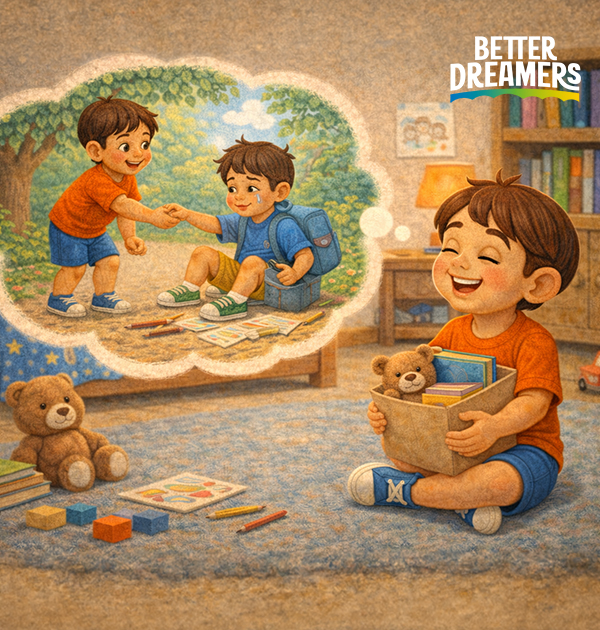
They start to understand that conflict doesn’t mean separation — it can lead to repair.
That idea alone reduces fear and aggression between siblings.
Repeated Stories Build Familiar Emotional Language
When siblings hear the same stories again and again, something interesting happens.
They begin to use the language from the story:
- “He didn’t mean it.”
- “She felt left out.”
- “Can we try again?”
Stories give children shared emotional vocabulary.
That shared language makes communication easier — and fights shorter.
Why Audio Stories Are Especially Helpful
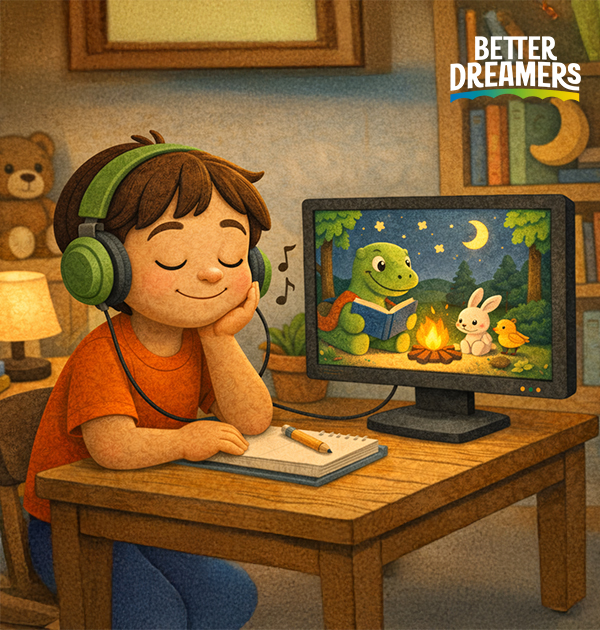
Audio stories remove visual competition.
No screen to fight over.
No “who’s closer.”
No overstimulation.
Children can listen side by side, each imagining the story in their own way — together, but not competing.
That alone reduces friction.
Where Better Dreamers Fits In
Better Dreamers stories are designed with emotional harmony in mind.
They are:
- calm in pace
- gentle in tone
- rich in emotional moments
- focused on understanding feelings
- safe for repeat listening
They don’t shame characters.
They don’t rush to solutions.
They show repair, kindness, and second chances — which is exactly what siblings need to see modeled.
This Isn’t About Stopping All Fights
Sibling fights won’t disappear.
And they don’t need to.
Conflict is part of learning how to live with others.
But stories help children:
- fight less intensely
- recover more quickly
- understand each other better
- feel safer at home
That’s real progress.
A Quieter Home Is Built One Story at a Time
Stories won’t replace parenting.
But they can support it — beautifully.
They give children tools you don’t have to repeat every day.
They soften hearts before words are exchanged.
They build understanding quietly, in the background.
And over time, that quiet work shows up as fewer fights…
and more moments of harmony at home.
One story at a time.